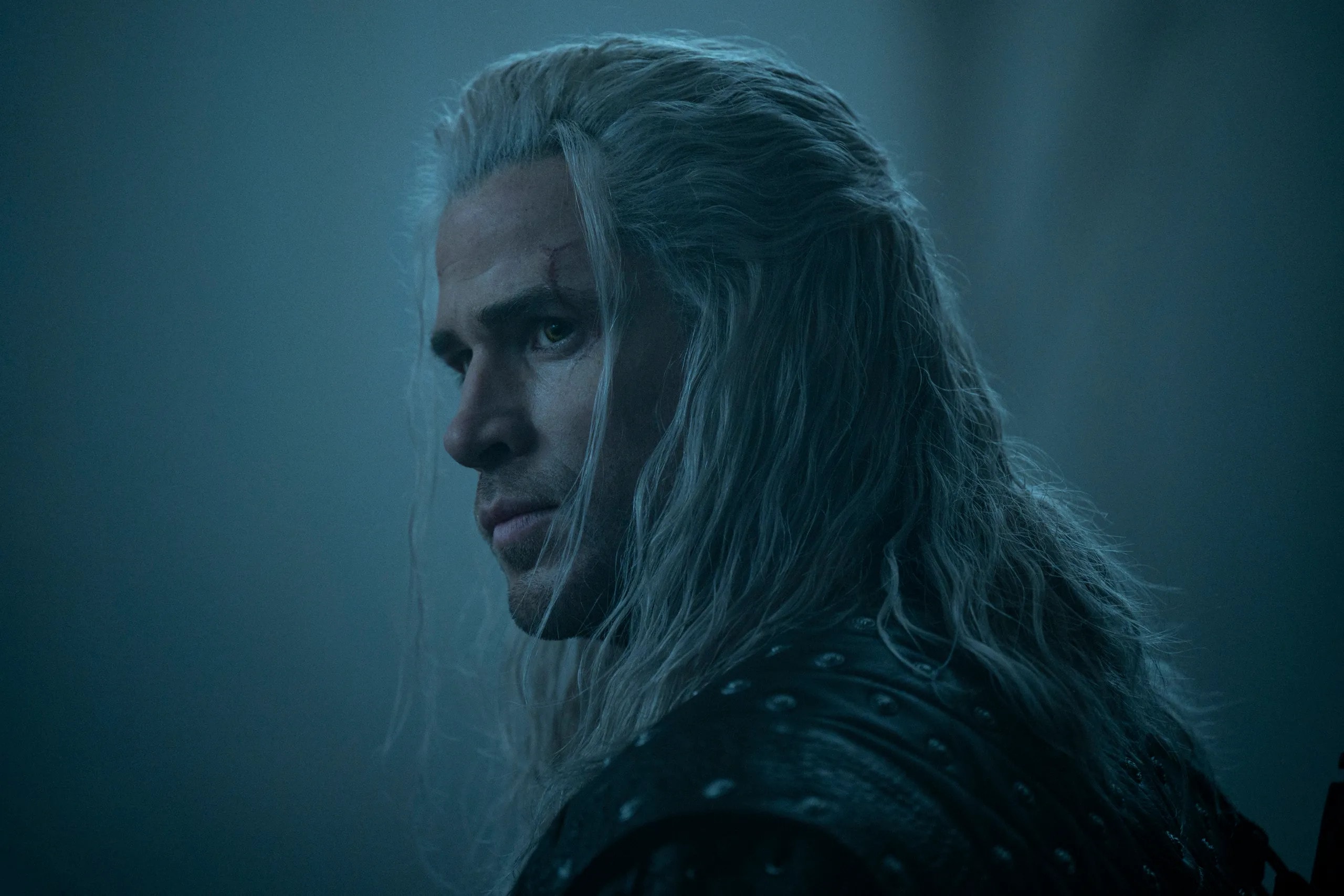
Geralt Reborn: How The Witcher Survived Losing Its Biggest Star—and What It Cost
In the annals of television history, few character transitions arrive weighted with as much anticipation—and trepidation—as Liam Hemsworth’s assumption of Geralt of Rivia’s iconic silver swords. When Netflix’s The Witcher returned for its fourth season, the 35-year-old Hunger Games alumnus stepped into medieval boots previously filled by Henry Cavill, whose 2022 departure sent shockwaves through the fantasy series’ devoted fanbase. The transition represents more than mere casting shuffle; it embodies the eternal tension between artistic vision and star power in contemporary streaming culture.
Cavill’s exit announcement, delivered via Instagram with characteristic gravitas, acknowledged both his journey’s end and Hemsworth’s beginning. “My journey as Geralt of Rivia has been filled with both monsters and adventures, and alas, I will be laying down my medallion and my swords for Season 4,” the 42-year-old actor wrote, accompanied by a striking image from the series. His benediction to his successor carried genuine warmth: “Liam, good sir, this character has such a wonderful depth to him, enjoy diving in and seeing what you can find.”
Yet beneath the diplomatic prose lurked rampant speculation. Fans immediately theorized about creative rifts—whispers of dissatisfaction with deviations from Andrzej Sapkowski’s source novels and potential disagreements over character interpretation proliferated across social media. The speculation intensified given Cavill’s well-documented passion for both the original books and video games, positioning him as perhaps too invested in canonical authenticity for a production requiring narrative flexibility.
source: NETFLIX
Executive producer Lauren Hissrich recently offered clarification to Entertainment Weekly, revealing that conversations regarding Cavill’s future had unfolded over considerable time. “He had plans for other roles that he really wanted to commit himself to,” Hissrich explained with pragmatic candor. “And for us, you don’t want to hold someone and force them to be doing something that they don’t want to do. I think that’s why it felt like a really symbiotic decision.”
Indeed, Cavill’s post-Witcher trajectory suggests an actor deliberately diversifying his portfolio. His 2024 slate alone—Argylle, The Ministry of Ungentlemanly Warfare, and Deadpool & Wolverine—demonstrates calculated movement toward blockbuster versatility rather than fantasy franchise entrenchment.
source: NETFLIX
What remains fascinating is the series’ cultural evolution. The Witcher’s 2019 debut transformed into phenomenon, spawning memes, merchandise, and that irrepressibly catchy “Toss a Coin to Your Witcher.” Seasons 2 and 3, arriving in 2021 and 2026 respectively, generated respectable reviews yet lacked that inaugural cultural combustion. Now, Season 4 faces its most formidable challenge: proving Geralt transcends any single actor’s interpretation.
Hemsworth’s inheritance arrives with both blessing and burden. As the premiere episode intones with perhaps unintentional meta-commentary, “And just when it seemed all was lost, Geralt rose again”—words applicable to both narrative and production reality. Whether audiences embrace this resurrection or mourn what’s been relinquished remains the season’s central dramatic question, one playing out across screens worldwide with stakes rivaling any monster-slaying quest.
In fantasy television’s ever-expanding landscape, The Witcher now attempts something rarely successful: continuation without its cornerstone.
Bella Hadid Victoria’s Secret Fashion Show headlines wrote themselves the moment the lights dropped in Los Angeles. The 2026 spectacle, which staged its comeback...
Kendall Jenner polka dot heels were the unexpected showstopper of Saturday night, when the supermodel arrived at the sixth annual Academy Museum Gala in...
Kim Kardashian Black Open-Toe Heels: 5 Stunning Reasons
Kim Kardashian black open-toe heels proved that restraint can be the loudest statement in the room. Arriving...