Billie Eilish Confronts Mark Zuckerberg’s Billions at WSJ Awards While Pledging Millions to Climate Justice
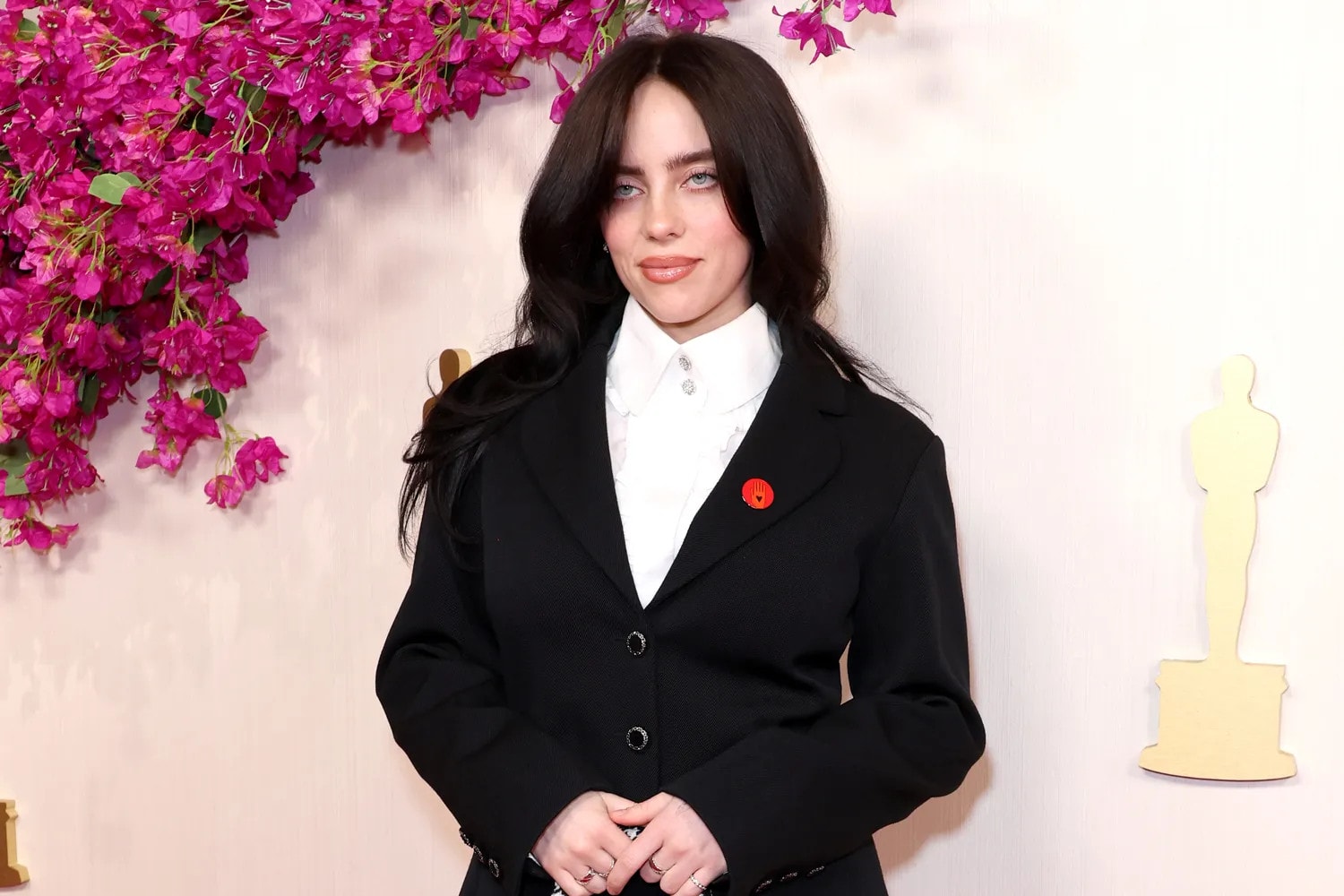
In a room glittering with New York’s most influential powerbrokers, Billie Eilish delivered the kind of sartorial and social statement that only she could orchestrate. At Wednesday’s WSJ Innovator Awards, the 23-year-old Grammy laureate accepted her music innovator trophy—but not before issuing a challenge that reverberated far beyond the evening’s champagne-soaked festivities. Standing among an elite constellation that included Ben Stiller, Spike Lee, Hailey Bieber, and George Lucas, Eilish transformed her acceptance speech into a manifesto on income inequality that left the room buzzing.
“Love you all, but there’s a few people in here that have a lot more money than me,” the singer declared with characteristic bluntness. “If you’re a billionaire, why are you a billionaire? No hate, but give your money away, shorties.” The comment landed with particular resonance given the presence of Meta CEO Mark Zuckerberg—whose $227.9 billion fortune makes him one of the planet’s wealthiest individuals—seated alongside his wife, Priscilla Chan, just rows away.
But Eilish’s remarks transcended mere provocation. They reflected a philosophy she’s actively embodying through her Hit Me Hard and Soft world tour, which concludes November 23rd after over 100 performances. Prior to receiving her award, presenter Stephen Colbert revealed that Eilish would be channeling $11.5 million from tour proceeds toward organizations championing food equity, climate justice, and carbon pollution reduction—a staggering commitment that transforms rhetoric into tangible impact.
source: JAMIE MCCARTHY, GETTY IMAGES
“We’re in a time right now where the world is really, really bad and really dark and people need empathy and help more than kind of ever, especially in our country,” Eilish elaborated, her words carrying the weight of genuine conviction. “I’d say if you have money, it would be great to use it for good things, maybe give it to some people that need it.”
Yet the singer’s activism extends beyond charitable donations into the granular details of sustainable touring practices. In a concurrent WSJ Magazine interview, Eilish detailed her commitment to environmental consciousness—from plant-based catering and biodegradable confetti to merchandise crafted from recycled cotton. It’s fashion activism at its most pragmatic, proving luxury and sustainability needn’t exist in opposition.
“You can literally make all the same stuff with sustainable materials, and people just aren’t doing it,” she stated with frustration. “The main thing that I’ve learned in working with so many companies and making my own merch and my perfume is that everyone can actually do it. It’s just that mostly they don’t.”
source: Frazer Harrison
Herein lies Eilish’s particular genius: her ability to wield cultural influence as both mirror and mandate. She doesn’t merely critique the system while benefiting from it—she actively reconstructs it from within, demanding better from herself and the industries she touches. In an era where performative activism often substitutes for substantive change, Eilish’s $11.5 million pledge and commitment to sustainable practices represent something increasingly rare: authenticity backed by action.
The billionaires in attendance may have shifted uncomfortably in their seats, but Eilish’s message wasn’t designed for comfort—it was designed to echo.
Bianca Fernandes is a rising fashion and lifestyle blogger making waves in the industry. On her blog 'Bianca's Style File', she shares her passion for all things chic and glamorous. With a background in fashion journalism, Bianca has her finger firmly on the pulse when it comes to the latest trends and must-have items. Her keen eye for style and knack for mixing high-end and high-street pieces has garnered her a loyal following. When she's not blogging, you can find Bianca at fashion shows scoping out next season's collections, discovering up-and-coming designers, and rubbing shoulders with fashion insiders to get the inside scoop for her readers. Bianca's style savviness and infectious enthusiasm for fashion shines through in her writing.
Bella Hadid Victoria’s Secret Fashion Show headlines wrote themselves the moment the lights dropped in Los Angeles. The 2026 spectacle, which staged its comeback...
Kendall Jenner polka dot heels were the unexpected showstopper of Saturday night, when the supermodel arrived at the sixth annual Academy Museum Gala in...
Kim Kardashian Black Open-Toe Heels: 5 Stunning Reasons
Kim Kardashian black open-toe heels proved that restraint can be the loudest statement in the room. Arriving...