Beyond Apocalypse Aesthetics: The Last of Us Crafts a Masterclass in Emotional Storytelling
In the penumbra between survival horror and tender human connection, HBO’s “The Last of Us” Season 2 paused its relentless forward momentum this week to deliver a masterfully crafted retrospective that fashion cognoscenti and cinephiles alike will recognize as essential narrative couture. Sunday’s episode, helmed by visionary creator Neil Druckmann, presents an emotional tapestry woven through time, exploring the fraying relationship between Joel (Pedro Pascal) and Ellie (Bella Ramsey) through a series of poignant vignettes spanning five transformative years.
The episode opens with sartorial simplicities – moments of unadorned joy as Joel orchestrates a birthday surprise for Ellie at a museum filled with prehistoric wonders and space memorabilia. Pascal and Ramsey’s performances are adorned with subtle details that telegraph deep emotional undercurrents beneath casual exchanges. Their chemistry remains the collection’s cornerstone piece, resilient yet increasingly threadbare as episodes progress.
As the narrative transitions through its temporal wardrobe change, we witness Ellie’s evolution from wide-eyed ward to disillusioned young woman. The styling choices mirror this transformation – her demeanor increasingly sharp-edged, her trust in Joel becoming a vintage piece she no longer wishes to wear. The relationship deteriorates in meticulous slow-motion, each scene adding another layer to the emotional palimpsest that defines their complex bond.
source: HBO
Two pivotal moments emerge as the episode’s statement pieces. First, a patrol encounter with an infected Eugene (husband to Jackson resident Gail) becomes the catalyst for moral conflict. When Joel executes the bitten man despite promises to return him to Jackson for goodbyes, Ellie’s disillusionment crystallizes into something harder, more permanent. Her subsequent confrontation with Joel about his deception of Gail showcases Ramsey’s exceptional ability to convey emotional complexity through minimalist expression – a trait the most sophisticated fashion photographers persistently seek to capture.
The second key tableau revisits the New Year’s Eve celebration, now reframed from Joel’s perspective. What previously appeared as a simple evening sequence reveals itself as emotionally bespoke tailoring – intricate, hand-crafted dramatic irony. Rather than retreating to bed as viewers were led to believe, Ellie confronts Joel about his long-suspected lie regarding the hospital. Pascal delivers Joel’s confession with devastating simplicity, confirming the tragic choices made to save Ellie’s life at the cost of potential humanity-saving vaccines.
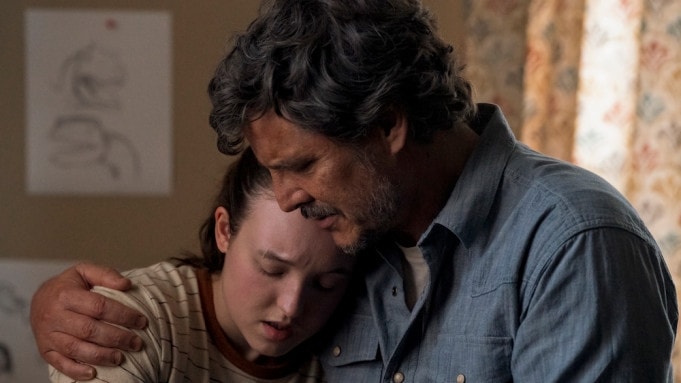
The denouement unfolds on a porch bathed in crepuscular light, where these two formidable personalities engage in emotional excavation. “I don’t know if I can forgive you, but I want to try,” Ellie confesses – a statement as raw as undyed fabric and equally vulnerable. This intimate dialogue renders transparent what Druckmann has consistently described as the show’s thematic foundation: a meditation on love and its consequences.
The episode concludes with Ellie approaching the Seattle theater where Jesse and Dina await – a visual bridge to the present storyline where she hunts Abby (Kaitlyn Dever) with singleminded determination. This structural choice serves as haute storytelling, linking temporal dimensions through emotional continuity rather than linear progression.
In an entertainment landscape often dominated by spectacle over substance, this episode stands as a testament to the power of emotional authenticity – proving once again that in both fashion and television, the most captivating statements are those that reveal rather than conceal our shared humanity.
Bianca Fernandes is a rising fashion and lifestyle blogger making waves in the industry. On her blog 'Bianca's Style File', she shares her passion for all things chic and glamorous. With a background in fashion journalism, Bianca has her finger firmly on the pulse when it comes to the latest trends and must-have items. Her keen eye for style and knack for mixing high-end and high-street pieces has garnered her a loyal following. When she's not blogging, you can find Bianca at fashion shows scoping out next season's collections, discovering up-and-coming designers, and rubbing shoulders with fashion insiders to get the inside scoop for her readers. Bianca's style savviness and infectious enthusiasm for fashion shines through in her writing.
Bella Hadid Victoria’s Secret Fashion Show headlines wrote themselves the moment the lights dropped in Los Angeles. The 2026 spectacle, which staged its comeback...
Kendall Jenner polka dot heels were the unexpected showstopper of Saturday night, when the supermodel arrived at the sixth annual Academy Museum Gala in...
Kim Kardashian Black Open-Toe Heels: 5 Stunning Reasons
Kim Kardashian black open-toe heels proved that restraint can be the loudest statement in the room. Arriving...