Beyond the Banned Book: How Netflix’s ‘Forever’ Transforms Judy Blume’s Legacy
In a bold reimagining that speaks to our current moment, Netflix’s adaptation of Judy Blume’s groundbreaking novel “Forever…” has been transformed through the visionary lens of showrunner Mara Brock Akil into a nuanced exploration of young Black love in contemporary America. Premiering this Thursday, the series represents a watershed moment in how we approach coming-of-age narratives in 2025.
Blume’s 1975 novel was revolutionary in its time—a rare depiction of teenage sexuality that refused to punish its young female protagonist for experiencing desire. Now, nearly five decades later, Brock Akil has shifted the perspective in a way that feels both timely and necessary. Where Katherine in the original novel navigated her sexual awakening against the backdrop of post-sexual revolution America, the Netflix adaptation centers on Keisha Clark and Justin Edwards, inverting traditional power dynamics in a refreshing departure from the source material.
“I would posit that Black boys are the most vulnerable at this time,” explains Brock Akil, the creative force behind the beloved “Girlfriends” series. Her decision to set the story in 2018—”between Trayvon Martin’s murder and George Floyd”—grounds the narrative in a specific moment when, as she describes it, Black families “felt like we were alone and screaming in a vacuum—a very scary time.”
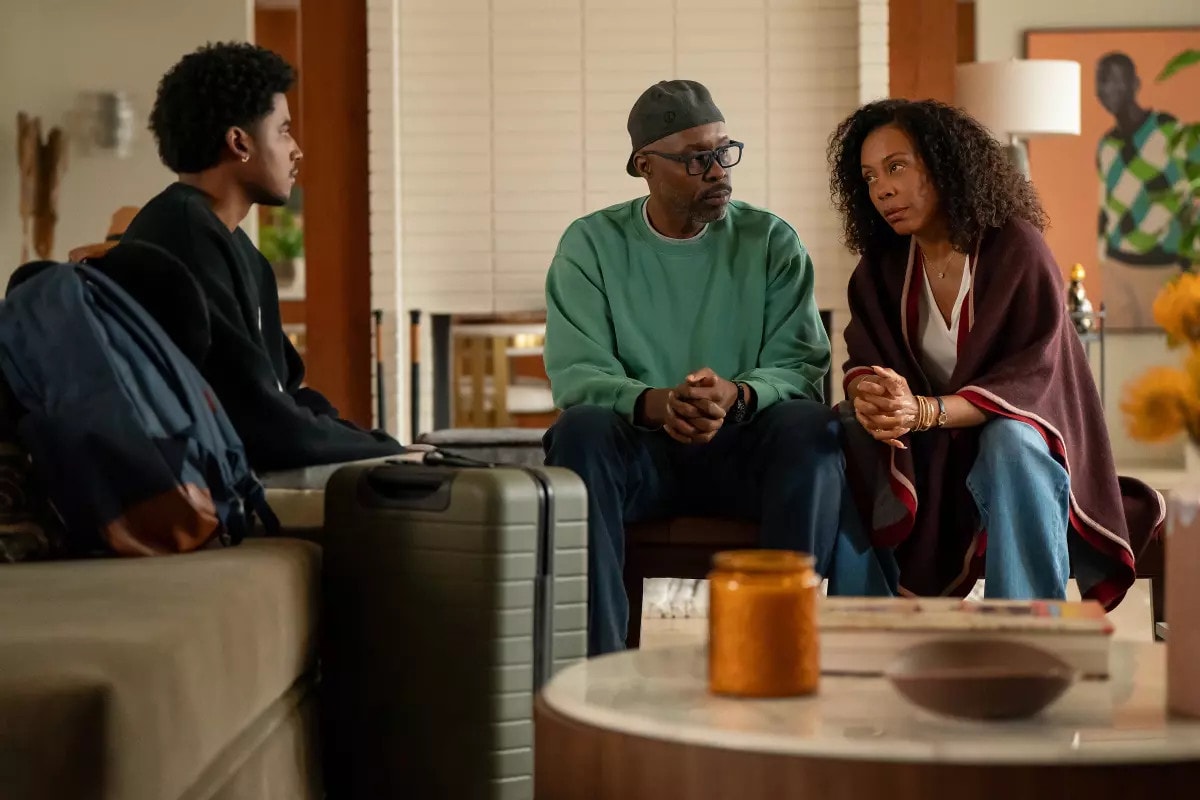
source: Elizabeth Morris/Netflix
The stellar cast features rising star Lovie Simone (“Greenleaf”) as Keisha, portraying her with a self-possession and wisdom beyond her years. Newcomer Michael Cooper Jr. delivers a breakthrough performance as Justin, capturing the vulnerability and earnestness of first love with disarming authenticity. Their chemistry crackles with the perfect balance of innocence and awakening that defined Blume’s original text.
What makes this adaptation particularly significant is how it preserves the emotional core of Blume’s work while expanding its social consciousness. Parents concerned about explicit content can breathe easy—this isn’t the gritty hyperrealism of “Euphoria.” Instead, Brock Akil has crafted something more profound: a tender exploration of young love that simultaneously addresses the unique pressures facing Black youth in America.
“We didn’t have the language that we have now,” Brock Akil notes about that pre-2020 period, referring to the conversations about “how we were parenting to get our children safe to their futures.” This context infuses every frame of the series with an emotional resonance that transforms what could have been a simple teen romance into something far more consequential.
source: Elizabeth Morris/Netflix
Blume herself, notoriously selective about adaptations of her work, found herself convinced by Brock Akil’s vision. “I didn’t think it would work today,” the iconic author admitted, distancing the new series from a forgettable 1978 TV movie version. Yet Brock Akil’s perspective—informed by her experience as a mother to Black sons—offered a compelling reimagining that secured Blume’s blessing.
As fashion and culture continue to reckon with issues of representation and authentic storytelling, “Forever” emerges as a timely reminder of how classic narratives can be reimagined to speak to new generations. The series demonstrates that coming-of-age stories needn’t sacrifice emotional truth for social relevance—they can achieve both with grace and insight.
When “Forever” debuts this Thursday, viewers will discover not just a nostalgic adaptation but a thoroughly modern love story that honors its source material while boldly charting new territory. In an era desperately in need of authentic portrayals of young Black love, Brock Akil’s vision delivers something truly revolutionary: a narrative where vulnerability becomes strength and first love becomes a radical act of hope.
Rosa Diniz recently joined the blogging world to share her vast knowledge and unbridled passion for all things shoes. Calling herself a 'shoe-alogist', Rosa brings a fresh perspective to the scene with her new blog 'Struttin' in Stilettos'. Rosa's obsession with heels began at a young age while admiring glamorous footwear in fashion magazines. She went on to gain hands-on experience working in a local shoe store during high school. Before getting her business degree, Rosa recognized her calling to help women find their perfect pair of heels. On her blog, she offers an extensive selection of stylish stilettos, pumps, wedges and more from top designers. With her keen eye and commitment to both beauty and comfort, Rosa aims to give women the confidence to strut pain-free wherever their heels take them. When she's not busy running her shoe empire, you can find Rosa attending runway shows to stay on top of the latest trends and blogging shoe tips for her growing audience. Rosa's contagious enthusiasm for heels shines through in her writing, making her a standout new voice in the fashion world.
Bella Hadid Victoria’s Secret Fashion Show headlines wrote themselves the moment the lights dropped in Los Angeles. The 2026 spectacle, which staged its comeback...
Kendall Jenner polka dot heels were the unexpected showstopper of Saturday night, when the supermodel arrived at the sixth annual Academy Museum Gala in...
Kim Kardashian Black Open-Toe Heels: 5 Stunning Reasons
Kim Kardashian black open-toe heels proved that restraint can be the loudest statement in the room. Arriving...