From Cold War Certainty to Modern Chaos: How A House of Dynamite Captures the New Nuclear Reality
In an era where the geopolitical landscape shifts with dizzying velocity and the specter of nuclear catastrophe feels less like Cold War nostalgia and more like imminent possibility, Kathryn Bigelow returns to what she does best: forcing us to confront the uncomfortable realities of modern warfare. Her latest cinematic endeavor, A House of Dynamite, arriving in select theaters and on Netflix this Friday, is perhaps her most claustrophobic and urgently terrifying work yet—a real-time thriller that compresses existential dread into a mere 20 minutes of screen time.
The premise is deceptively simple, which is precisely what makes it so devastating. An intercontinental ballistic missile of unknown origin is hurtling toward American soil, destination: Chicago. The fictional president of the United States, along with military advisors and defense personnel, has less than twenty minutes and frustratingly scant information to determine whether to launch a retaliatory strike. It’s the geopolitical equivalent of Russian roulette, played with the lives of millions.
For screenwriter Noah Oppenheim, the film began with a single, haunting question—one that undoubtedly kept him awake at night and will likely do the same for audiences. What unfolds is not a story of incompetence or villainy, but something far more unsettling: a scenario where everyone does everything correctly, and yet the system itself remains fundamentally, catastrophically broken.
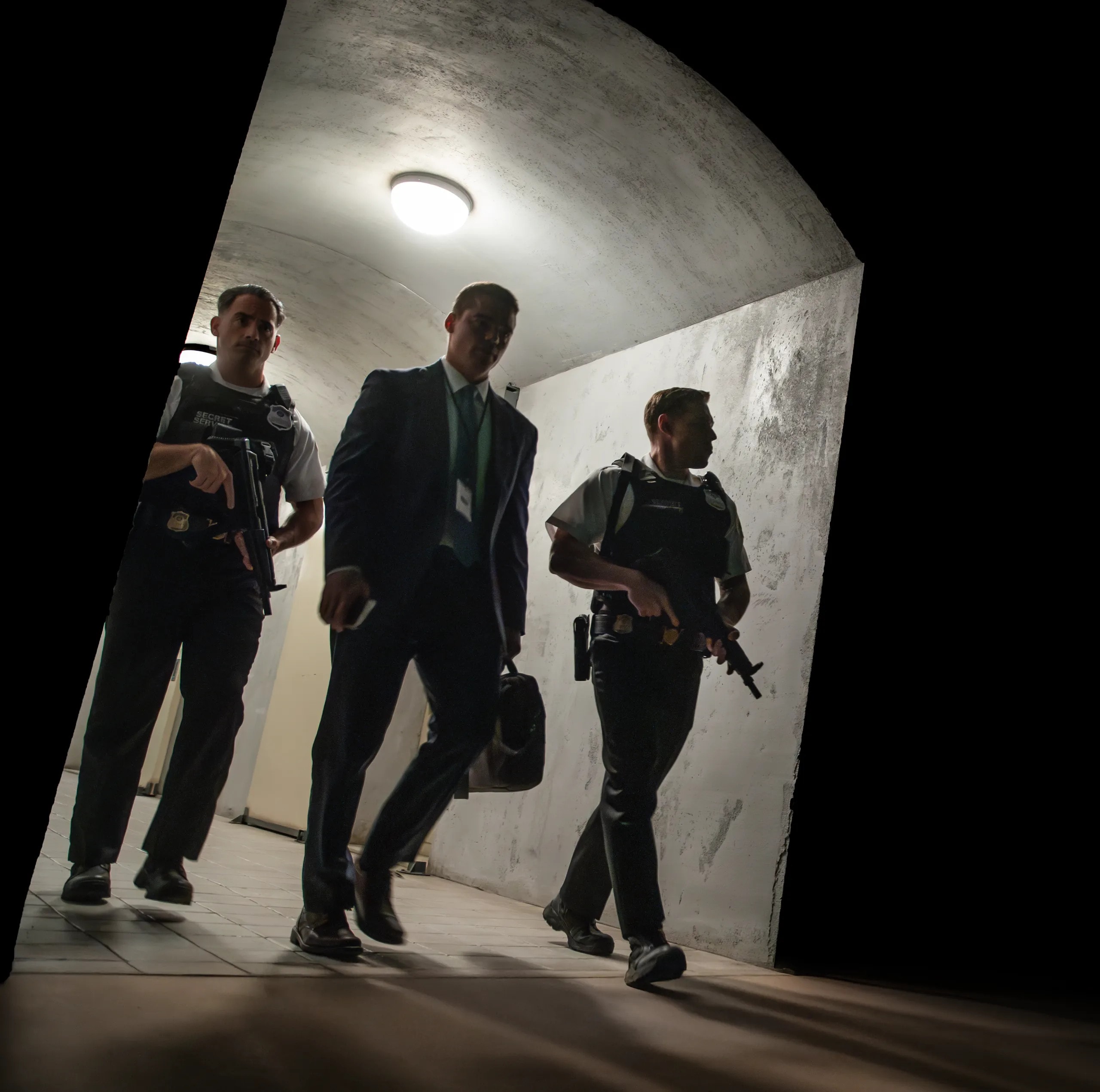
source: EROS HOAGLAND/NETFLIX
Bigelow and Oppenheim make deliberate, almost radical choices in their construction of this nightmare. The president is portrayed as rational, even affable—a far cry from the bombastic caricatures that populate much of contemporary political cinema. Military personnel adhere meticulously to protocol. The commanding general remains unruffled and reliable, the picture of professional competence. “We did everything right, right?” one officer asks his colleagues with palpable desperation. The film’s answer is a resounding yes—but that correctness offers no comfort whatsoever when the house of dynamite we’ve collectively constructed can detonate within minutes, erasing entire cities and their populations.
The film opens with disarming banality: two military personnel at Fort Greely, a U.S. missile-defense installation in Alaska, engaging in the kind of mundane office chatter that could easily be mistaken for a Saturday Night Live sketch about that insufferable coworker. Then, with whiplash-inducing abruptness, the tone shifts. An ICBM they’ve been monitoring suddenly changes trajectory, its arc flattening ominously. It’s headed directly for American soil, and nobody knows who launched it.
Cut to the White House Situation Room, where watch-floor duty officers scramble as they realize Chicago has eighteen minutes before impact. The United States has precisely one opportunity to intercept the missile—but as Oppenheim grimly notes, America possesses fewer than fifty ground-based interceptors in its entire arsenal, with a success rate of merely 61 percent under controlled test conditions. “When you’re testing a system, you’re able to control a lot,” he explains. “So it’s likely that in a real-world scenario, the success rate would be even lower.”
source: EROS HOAGLAND/NETFLIX
This is the crux of Bigelow’s thesis: During the Cold War, the adversary was known—the Soviet Union. Today, nine nations possess nuclear capabilities, exponentially increasing the possibility of error, rogue actors, or the total information vacuum depicted in the film. And the arms race? It’s only accelerating.
In accompanying interviews, Tom Nichols, a national-security writer at The Atlantic, provides sobering context about contemporary nuclear proliferation and how such scenarios might unfold under leadership driven by motivations far less rational than the film’s fictional president.
A House of Dynamite doesn’t offer easy answers because there are none. It simply asks us to stare into the abyss we’ve created—and recognize that the fuse is already lit.
Rosa Diniz recently joined the blogging world to share her vast knowledge and unbridled passion for all things shoes. Calling herself a 'shoe-alogist', Rosa brings a fresh perspective to the scene with her new blog 'Struttin' in Stilettos'. Rosa's obsession with heels began at a young age while admiring glamorous footwear in fashion magazines. She went on to gain hands-on experience working in a local shoe store during high school. Before getting her business degree, Rosa recognized her calling to help women find their perfect pair of heels. On her blog, she offers an extensive selection of stylish stilettos, pumps, wedges and more from top designers. With her keen eye and commitment to both beauty and comfort, Rosa aims to give women the confidence to strut pain-free wherever their heels take them. When she's not busy running her shoe empire, you can find Rosa attending runway shows to stay on top of the latest trends and blogging shoe tips for her growing audience. Rosa's contagious enthusiasm for heels shines through in her writing, making her a standout new voice in the fashion world.
Bella Hadid Victoria’s Secret Fashion Show headlines wrote themselves the moment the lights dropped in Los Angeles. The 2026 spectacle, which staged its comeback...
Kendall Jenner polka dot heels were the unexpected showstopper of Saturday night, when the supermodel arrived at the sixth annual Academy Museum Gala in...
Kim Kardashian Black Open-Toe Heels: 5 Stunning Reasons
Kim Kardashian black open-toe heels proved that restraint can be the loudest statement in the room. Arriving...