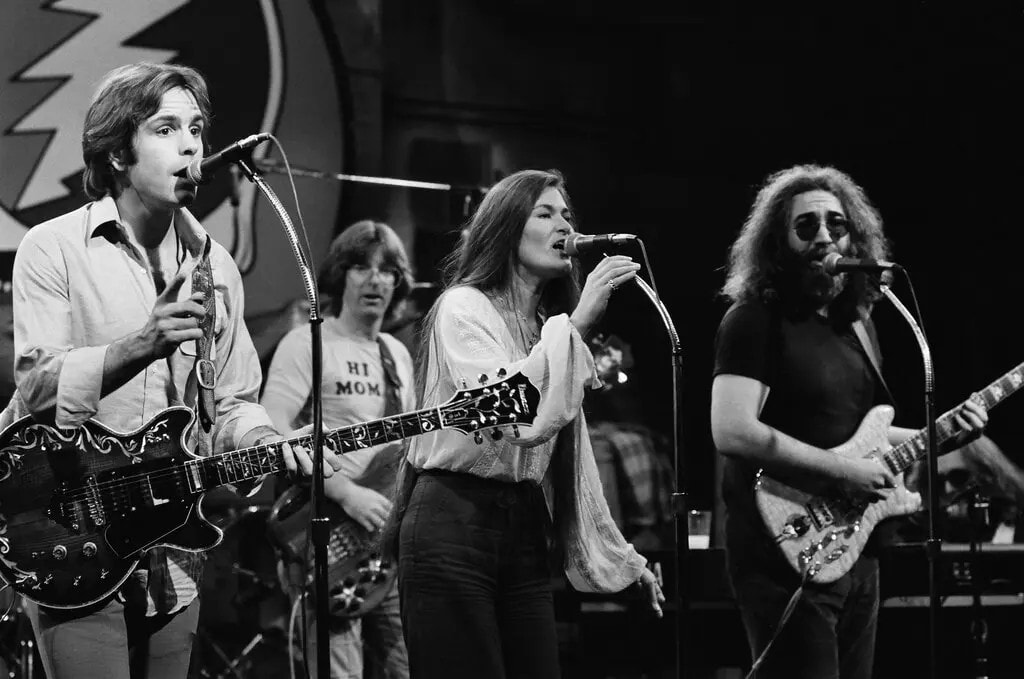
Donna Jean Godchaux: How One Alabama Girl’s Voice Changed Music Forever
The music world dims considerably with the passing of Donna Jean Godchaux-MacKay, the Alabama-born vocalist whose voice became woven into the very fabric of American music history. She departed this earthly stage Sunday, November 2nd, at a Nashville hospice facility at 78, following what her representative Dennis McNally described as a “lengthy struggle with cancer.” In the poetic words of Grateful Dead lyricist Robert Hunter, may the four winds indeed blow her safely home.
Godchaux’s story reads like a perfectly curated vintage collection—each chapter distinct, yet seamlessly connected. Born Donna Jean Thatcher in Florence, Alabama, she emerged from the legendary Muscle Shoals scene during the Sixties’ most electrifying renaissance. Her voice—warm as Southern honey yet powerful as storm clouds gathering—graced Percy Sledge’s soul-stirring “When a Man Loves a Woman” and Elvis Presley’s smoldering “Suspicious Minds.” She was the secret ingredient in hits by Cher, Neil Diamond, Duane Allman, and Boz Scaggs, proving that true style often works its magic from behind the scenes.
Her Memphis recording session with Elvis in 1969 exemplifies her combination of professionalism and genuine star-struck wonder. While cutting “Suspicious Minds” and “In the Ghetto” at American Sound Studio, Godchaux maintained impeccable composure—”we were so professional,” she recalled to Rolling Stone. Yet afterward, clutching a Polaroid with the King, she and fellow vocalists screamed with joy at an International House of Pancakes for an hour. It’s this duality—polish and passion—that defined her entire career.
In 1970, Godchaux traded Southern comfort for West Coast counterculture, settling in San Francisco where destiny awaited. After witnessing the Grateful Dead perform, she boldly approached Jerry Garcia post-show with the confidence of someone wearing perfectly broken-in vintage boots: “I told Jerry that Keith needed to be in the band and I needed his home phone number, and I got his number!” Both she and husband Keith Godchaux joined soon after.
The Seventies became Godchaux’s golden era with the Dead. Her vocals illuminated seminal albums like Europe ’72, Wake of the Flood, and Terrapin Station, while legendary performances—from Cornell ’77 to the mystical 1978 Giza pyramid shows—captured her ethereal contributions. Transitioning from controlled studio environments to the Dead’s gloriously chaotic live performances challenged her, yet she embraced imperfection with grace, acknowledging pitchy moments while understanding that raw authenticity trumps sterile perfection.
Following Keith’s tragic death in the early Eighties, Godchaux continued creating, fronting the Donna Jean Godchaux Band and releasing music through 2014. She remained, as McNally’s statement beautifully articulated, “a sweet and warmly beautiful spirit”—proof that true elegance transcends fashion or fame, residing instead in how one touches others’ lives.
Donna Jean Godchaux didn’t just sing songs; she embroidered herself into music’s tapestry, leaving golden threads that will shimmer eternally.
Beth Hans is an experienced fashion blogger and heel aficionado based in Los Angeles. With over 10 years in the industry, Beth has developed a keen eye for the latest and greatest trends in women's heels and footwear. On her popular blog 'Heels of Style', Beth provides in-depth reviews on today's top designer heels, recommends must-have shoes for any occasion, and shares expert tips on how to walk gracefully and pain-free in even the highest stilettos. When she's not blogging, you can find Beth searching local boutiques for hidden gem shoe brands and attending Fashion Week runway shows to spot the heel styles of the upcoming season. With her vast knowledge and passion for elevated foot fashion, Beth Hans is considered one of the top experts on all things high heels.
Bella Hadid Victoria’s Secret Fashion Show headlines wrote themselves the moment the lights dropped in Los Angeles. The 2026 spectacle, which staged its comeback...
Kendall Jenner polka dot heels were the unexpected showstopper of Saturday night, when the supermodel arrived at the sixth annual Academy Museum Gala in...
Kim Kardashian Black Open-Toe Heels: 5 Stunning Reasons
Kim Kardashian black open-toe heels proved that restraint can be the loudest statement in the room. Arriving...