Confidence Game: Netflix’s Titan Exposes the Cult of Anti-Expertise
In the pantheon of modern cautionary tales, few stories capture the zeitgeist quite like the Titan submersible disaster—a tragedy that Netflix’s new documentary “Titan: The OceanGate Disaster” transforms from maritime catastrophe into a chilling examination of contemporary American mythology. Director Mark Monroe has crafted something far more unsettling than a simple disaster documentary; he’s created a mirror reflecting our culture’s most dangerous delusions.
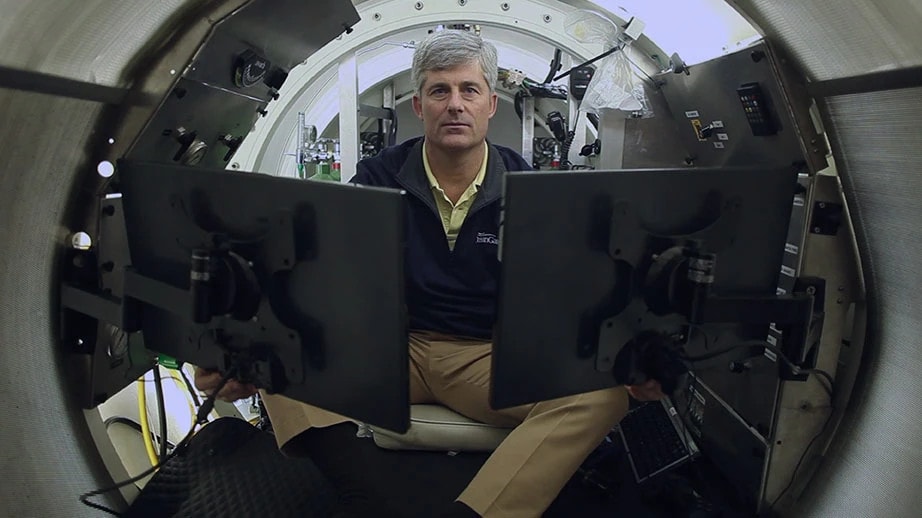
What emerges from Monroe’s meticulous reconstruction isn’t just the story of five lives lost in the crushing depths of the North Atlantic, but a portrait of Stockton Rush—OceanGate’s CEO and the Titan’s architect—as the embodiment of everything toxic about our current obsession with disruption culture. Rush, with his patrician pedigree tracing back to two signers of the Declaration of Independence, represents a particularly American brand of entitled incompetence dressed up as visionary leadership.
The documentary’s most chilling revelation isn’t the technical failures that doomed the Titan, but the willful blindness that enabled them. Rush’s casual reassurance to passengers—”If you hear an alarm, just don’t worry about it”—becomes a metaphor for an entire mindset that prioritizes confidence over competence, narrative over knowledge. This wasn’t ignorance; it was ideological commitment to the belief that traditional expertise and regulatory oversight are obstacles to be circumvented rather than safeguards to be respected.
source: Netflix
Monroe’s organizational chart, showing employees disappearing as they quit in protest or were fired for raising concerns, becomes a visual representation of how dangerous leadership isolates itself from dissent. David Lochridge, the company’s former director of marine operations dubbed “the Whistleblower,” emerges as the documentary’s tragic hero—a man whose professional expertise was dismissed in favor of Rush’s personal mythology.
What makes Rush particularly fascinating as a character study is his ordinariness. Unlike the tech titans he idolized—Elon Musk, Jeff Bezos, James Cameron—Rush lacked both the achievement and the charisma that typically accompany cult-like devotion. His performance at prep school and Princeton was unremarkable, his scientific understanding fundamentally flawed. Yet he managed to convince intelligent, accomplished people to follow him into the abyss, both literally and figuratively.
The documentary suggests that Rush’s power lay not in genius but in mythology—specifically, the mythology of the disruptive entrepreneur who changes the world by breaking rules. He gave paying customers meaningless tasks so he could classify them as “mission specialists,” circumventing safety regulations. He launched from international waters to avoid oversight. He promised to revolutionize deep-sea exploration by replacing expensive, proven titanium hulls with lightweight carbon fiber—a material that had never been tested at extreme depths.
The tragedy illuminates how our culture has confused confidence with competence, disruption with innovation. Videographer Joseph Assi recalls how everyone felt “privileged” and “special” to be part of Rush’s venture, but the documentary raises uncomfortable questions about whether this was genuine belief or purchased enthusiasm. OceanGate wasn’t a Theranos-style fraud—Rush believed in his product enough to die for it—but it operated on the same dangerous premise that traditional expertise is an obstacle to progress.
The documentary positions Rush as “a relatively small symptom of a much larger disease”—our society’s dangerous romance with anti-establishment entrepreneurship. While Rush name-dropped “Elon” as if they were intimates, he never achieved his hero’s scale of accomplishment or destruction. But in OceanGate’s tragedy, we see the same pathologies writ small: the dismissal of expertise, the conflation of wealth with wisdom, the belief that rules don’t apply to visionaries.
Monroe’s film arrives at a moment when our immunity to such mythology remains dangerously weak. The Titan disaster offers a concentrated dose of our culture’s most toxic beliefs—perhaps potent enough to serve as a vaccine against future tragedies. Whether we develop the antibodies necessary to resist the next charismatic disruptor remains to be seen. The depths of human folly, like the ocean floor itself, continue to claim victims who mistake confidence for competence, mythology for reality.
Rosa Diniz recently joined the blogging world to share her vast knowledge and unbridled passion for all things shoes. Calling herself a 'shoe-alogist', Rosa brings a fresh perspective to the scene with her new blog 'Struttin' in Stilettos'. Rosa's obsession with heels began at a young age while admiring glamorous footwear in fashion magazines. She went on to gain hands-on experience working in a local shoe store during high school. Before getting her business degree, Rosa recognized her calling to help women find their perfect pair of heels. On her blog, she offers an extensive selection of stylish stilettos, pumps, wedges and more from top designers. With her keen eye and commitment to both beauty and comfort, Rosa aims to give women the confidence to strut pain-free wherever their heels take them. When she's not busy running her shoe empire, you can find Rosa attending runway shows to stay on top of the latest trends and blogging shoe tips for her growing audience. Rosa's contagious enthusiasm for heels shines through in her writing, making her a standout new voice in the fashion world.
Bella Hadid Victoria’s Secret Fashion Show headlines wrote themselves the moment the lights dropped in Los Angeles. The 2026 spectacle, which staged its comeback...
Kendall Jenner polka dot heels were the unexpected showstopper of Saturday night, when the supermodel arrived at the sixth annual Academy Museum Gala in...
Kim Kardashian Black Open-Toe Heels: 5 Stunning Reasons
Kim Kardashian black open-toe heels proved that restraint can be the loudest statement in the room. Arriving...