Nicki Minaj’s Political Metamorphosis: From Trump Critic to MAGA Champion
In an unexpected convergence of entertainment and politics that has set social media ablaze, rap icon Nicki Minaj made a stunning appearance at Turning Point USA’s AmericaFest convention in Arizona on Sunday, delivering remarks that have left fans, critics, and industry insiders reeling. The Grammy-nominated superstar, whose career has been defined by bold fashion statements and unapologetic lyrics, used the platform to express unwavering support for President Donald Trump and Vice President JD Vance, describing them as “role models” for young men—a declaration that marks a dramatic ideological pivot for the artist.
Speaking with Erika Kirk, widow of late conservative activist Charlie Kirk, at the organization’s flagship gathering, Minaj delivered an impassioned speech that traversed political terrain as boldly as her most daring red carpet ensembles. “I have the utmost respect and admiration for our president,” the rap superstar proclaimed, her words resonating through the convention hall. “I don’t know if he even knows this, but he has given so many people hope that there is a chance to beat the bad guys and to win, and to do it with your head held high.”
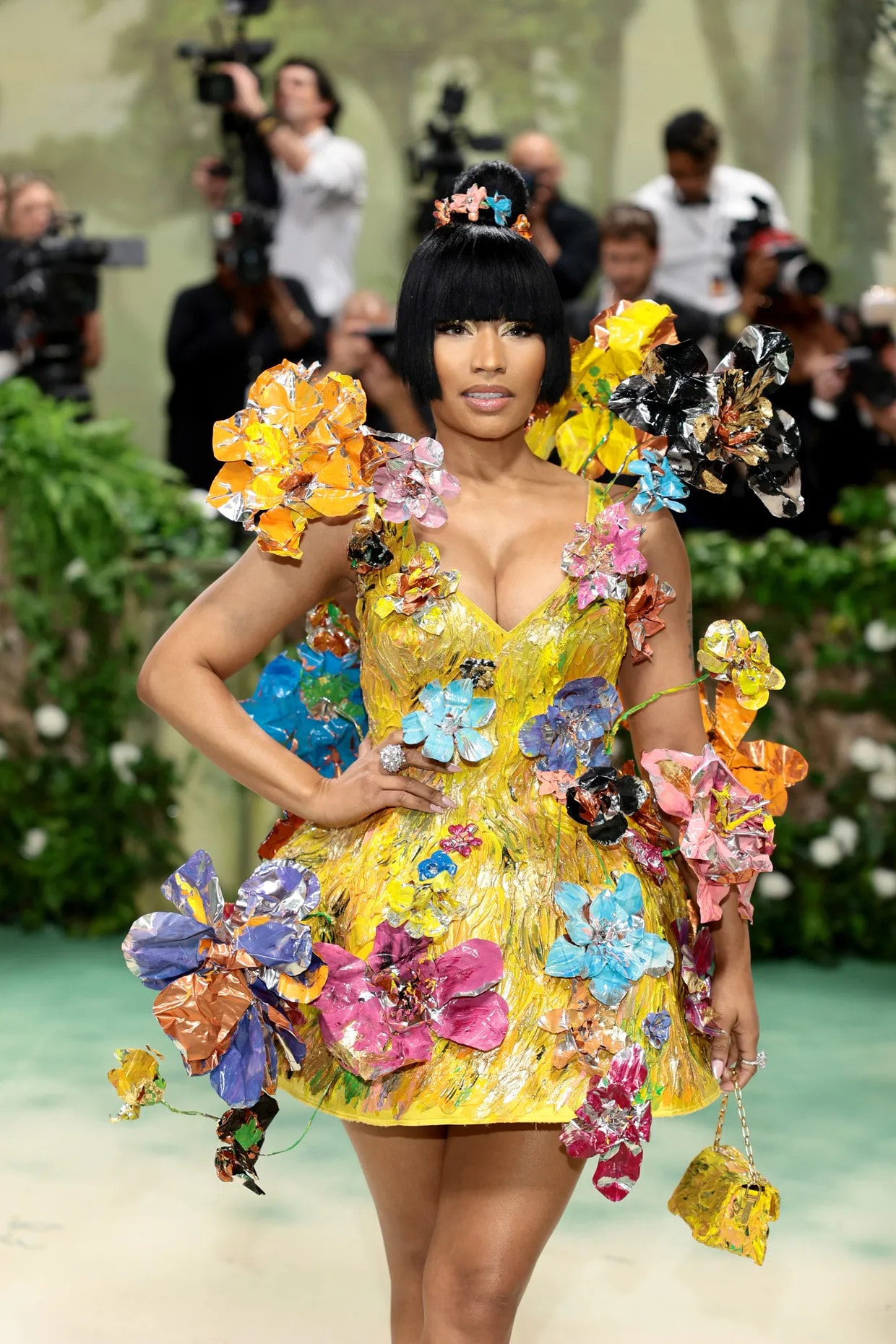
This remarkable appearance represents a striking transformation for an artist who previously criticized Trump during his first administration. Minaj’s political evolution—once as difficult to define as avant-garde couture—has crystallized into full-throated MAGA advocacy, complete with pointed criticism of California Governor Gavin Newsom, whom she mockingly dubbed “Newscum” and “Gavie-poo” while reading from her own social media archives.
The “Super Bass” hitmaker didn’t stop at political endorsements. In a moment that will undoubtedly fuel countless think pieces, Minaj championed traditional gender roles, declaring, “There is nothing wrong with being a boy. How about that? How powerful is that? How profound is that? Boys will be boys and there is nothing wrong with that.” Her rhetoric echoed conservative talking points about youth and identity, representing a departure from the progressive politics typically associated with hip-hop culture.
Minaj also praised Turning Point USA for encouraging spiritual connection among young people, lamenting what she perceives as Christian persecution both domestically and internationally. Her November alignment with the Trump administration’s assertions about Christian persecution in Nigeria—claims disputed by the Nigerian government—had already positioned her as an unlikely political voice within conservative circles.
As the intersection of celebrity influence and political activism continues to reshape cultural conversations, Minaj’s appearance raises provocative questions about authenticity, evolution, and the complex relationship between artistry and ideology in our increasingly polarized landscape.
Beth Hans is an experienced fashion blogger and heel aficionado based in Los Angeles. With over 10 years in the industry, Beth has developed a keen eye for the latest and greatest trends in women's heels and footwear. On her popular blog 'Heels of Style', Beth provides in-depth reviews on today's top designer heels, recommends must-have shoes for any occasion, and shares expert tips on how to walk gracefully and pain-free in even the highest stilettos. When she's not blogging, you can find Beth searching local boutiques for hidden gem shoe brands and attending Fashion Week runway shows to spot the heel styles of the upcoming season. With her vast knowledge and passion for elevated foot fashion, Beth Hans is considered one of the top experts on all things high heels.
Bella Hadid Victoria’s Secret Fashion Show headlines wrote themselves the moment the lights dropped in Los Angeles. The 2026 spectacle, which staged its comeback...
Kendall Jenner polka dot heels were the unexpected showstopper of Saturday night, when the supermodel arrived at the sixth annual Academy Museum Gala in...
Kim Kardashian Black Open-Toe Heels: 5 Stunning Reasons
Kim Kardashian black open-toe heels proved that restraint can be the loudest statement in the room. Arriving...