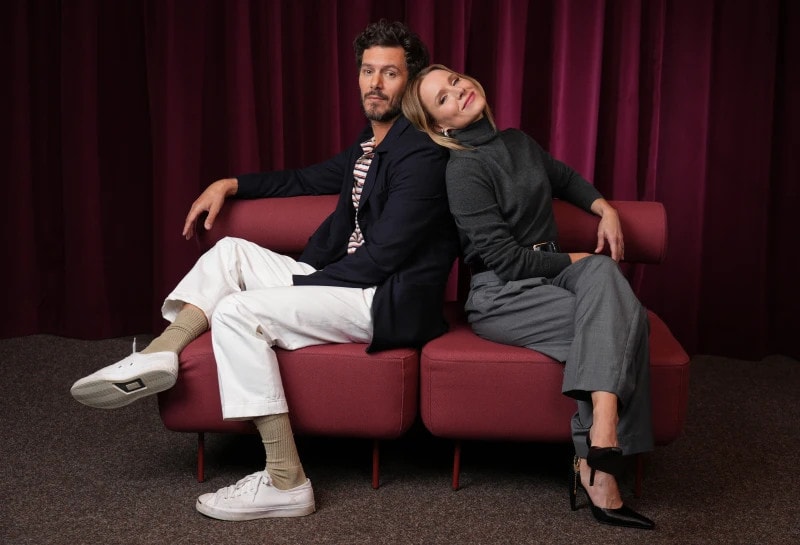
Kristen Bell on Season 2 of “Nobody Wants This”: “We Won the Lottery with This Story”
When Nobody Wants This first dropped on Netflix last year, no one—least of all its creators—anticipated just how fervently audiences would fall for its witty, imperfect portrayal of love, faith, and modern romance. The series, which follows the unexpected relationship between a sharp-witted Reform rabbi (Adam Brody) and a candid, agnostic podcaster (Kristen Bell), became a surprise cultural phenomenon, spending six consecutive weeks on Netflix’s Global Top 10 list and amassing over 57 million views in its first three months.
“We kind of won the lottery,” Bell reflected ahead of the show’s sophomore season premiere this Thursday. “People were ready for this kind of story—something irreverent, warm, and honest.”
At its core, Nobody Wants This is a romantic comedy for the emotionally literate—a genre that has grown rare in an age of cynical streaming formulas. Its dialogue hums with the tension between belief and doubt, while its characters wrestle with vulnerability as much as they do attraction. But even as the internet swooned over Brody’s now-iconic “hot rabbi,” the series also sparked controversy. Critics accused it of leaning into antisemitic tropes, particularly through its portrayal of Jewish women as rigid foils to Bell’s free-spirited Joanne.
source: AP Photo/Chris Pizzello
“When I first watched it, I was deeply uncomfortable,” admitted Rabbi Elan Babchuck, Executive Vice President of the National Jewish Center for Learning and Leadership. “There’s a lot I would have wanted to change.” He cited the show’s early treatment of Judaism as “a test to pass rather than a tradition to pass on.” But upon watching the full season, his perspective evolved: “I celebrate it now. Representation matters—even in flawed form.”
That duality—the ability to provoke discomfort and delight in equal measure—may be what makes Nobody Wants This so magnetic. Season 2 leans into that complexity with new creative leadership. HBO Girls veterans Jenni Konner and Bruce Eric Kaplan have stepped in as showrunners, while creator Erin Foster—who loosely based the series on her own life and conversion to Judaism—remains on board as an executive producer. “We love this show,” Konner said. “It’s Erin’s voice, it’s her story. Our job is to protect that voice and help her shape it.”
source: AP Photo/Chris Pizzello
If Season 1 was about falling in love, Season 2 promises to examine what comes after—the messy, meaningful business of sustaining it. Bell’s Joanne is now navigating faith, family, and self-doubt under the spotlight of an internet that alternately worships and critiques her every move. Brody’s Noah, meanwhile, must reconcile his devotion to tradition with the modern love that both challenges and completes him.
What remains undeniable is that Nobody Wants This has become something rare in the crowded world of streaming: a show that invites conversation rather than conformity. It asks viewers to sit with tension, question assumptions, and find beauty in imperfection. And if the first season was lightning in a bottle, Season 2 feels like a deliberate continuation of that spark—a love story both spiritual and startlingly human.
Rosa Diniz recently joined the blogging world to share her vast knowledge and unbridled passion for all things shoes. Calling herself a 'shoe-alogist', Rosa brings a fresh perspective to the scene with her new blog 'Struttin' in Stilettos'. Rosa's obsession with heels began at a young age while admiring glamorous footwear in fashion magazines. She went on to gain hands-on experience working in a local shoe store during high school. Before getting her business degree, Rosa recognized her calling to help women find their perfect pair of heels. On her blog, she offers an extensive selection of stylish stilettos, pumps, wedges and more from top designers. With her keen eye and commitment to both beauty and comfort, Rosa aims to give women the confidence to strut pain-free wherever their heels take them. When she's not busy running her shoe empire, you can find Rosa attending runway shows to stay on top of the latest trends and blogging shoe tips for her growing audience. Rosa's contagious enthusiasm for heels shines through in her writing, making her a standout new voice in the fashion world.
Taylor Swift Travis Kelce date night looks are officially a genre of their own, and the newlyweds' latest outing proves marriage hasn't dulled their...
Suki Waterhouse Venice Film Festival style delivered exactly the kind of tousled-glamour moment her fans have come to expect. On September 5th, the singer-actress...
Kendall Jenner vintage Armani was the look heard 'round the Lido on Thursday, as the model-turned-tequila-entrepreneur made her long-awaited debut at the 2026 Venice...