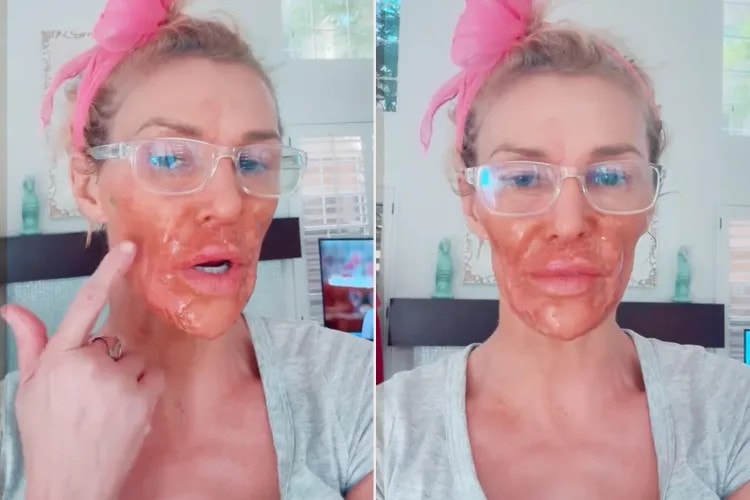
Fountain of Youth or Chemical Catastrophe? Brandi Glanville’s Shocking Skincare Confession
In the ever-evolving landscape of beauty innovation, where social media influencers and reality television personalities wield unprecedented influence over skincare trends, a cautionary tale has emerged that serves as a stark reminder of the perils inherent in unsupervised beauty experimentation. Brandi Glanville, the ever-controversial alumna of The Real Housewives of Beverly Hills, has found herself at the epicenter of a digital firestorm following her latest venture into what she optimistically termed a revolutionary “beauty hack.”
The 52-year-old reality television veteran, who has been courageously battling an ongoing facial condition that has significantly impacted her appearance and quality of life, took to TikTok this past Sunday with what she believed to be groundbreaking beauty intelligence. In a video that has since sparked intense debate within beauty circles, Glanville proclaimed her discovery of what she dramatically dubbed “the fountain of youth” – a treatment protocol involving the facial application of Nair, a product traditionally reserved for body hair removal.
“Good news, you guys don’t have to spend a lot of money on pills and lasers anymore,” Glanville announced to her substantial social media following, her confidence palpable despite the visible aftermath of her experimental treatment. The former Bravo personality explained her unconventional methodology through the lens of her personal health journey, detailing how exfoliation techniques allegedly disturb what she believes to be a parasitic condition affecting her facial tissue.
source: Paul Archuleta/Getty
However, what began as an enthusiastic endorsement quickly transformed into a concerning display of the potential consequences of unauthorized cosmetic procedures. Glanville’s admission that she “overdid it” and was experiencing significant pain painted a troubling picture of beauty experimentation gone awry. Her TikTok caption, punctuated by obvious discomfort and warning against her seven-minute application time, revealed the harsh reality behind her initial optimism.
The beauty community’s response was swift and unequivocal. Comments flooded in from concerned viewers, many of whom recognized the telltale signs of chemical burning and urged immediate medical intervention. The collective alarm was not unfounded – dermatological experts have long cautioned against the facial application of hair removal products, particularly without proper patch testing and medical supervision.
This incident illuminates a broader conversation about the democratization of beauty advice through social media platforms, where the line between helpful tips and potentially dangerous misinformation continues to blur. While Nair’s official guidelines do permit facial use of certain formulations, they emphasize the critical importance of patch testing and careful adherence to application protocols.
The medical community’s stance on depilatory creams remains clear: even when used according to manufacturer instructions, these products carry inherent risks of chemical burns due to their active ingredients, including calcium hydroxide and potassium hydroxide. These powerful compounds, designed to break down hair structure, can equally compromise skin integrity when misapplied.
As the beauty industry continues to grapple with the influence of social media personalities on consumer behavior, Glanville’s experience serves as a sobering reminder that innovation and experimentation must never supersede safety and professional guidance in the pursuit of aesthetic enhancement.
Brooks Nader proved once again why she's become one of Milan Fashion Week's most photographed guests, stepping out on Saturday, September 26 for Dolce...