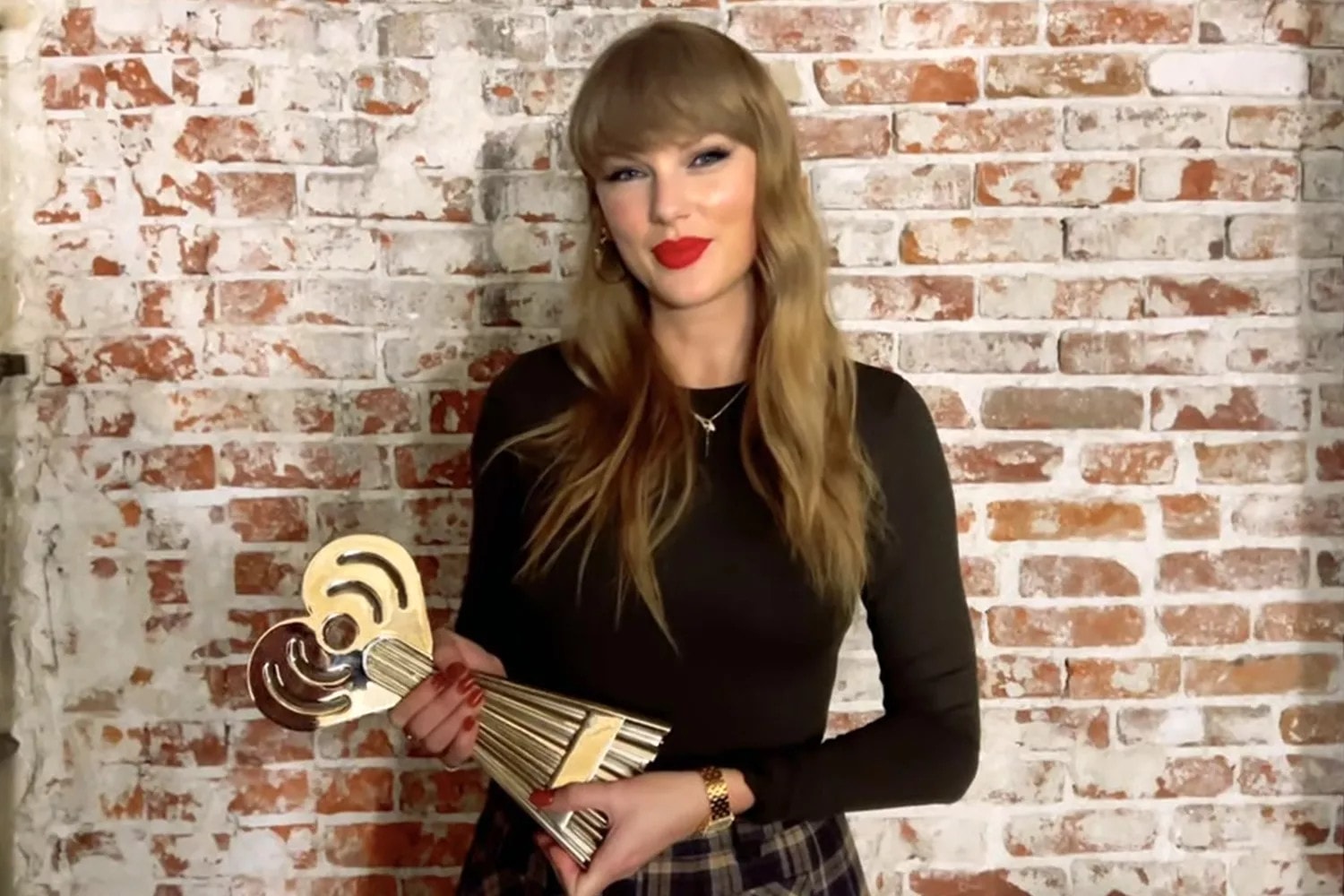
Swift Justice: Pop’s Reigning Queen Reclaims Her Creative Empire in $300M+ Deal
In a move that redefines artist empowerment in the digital age, Taylor Swift has triumphantly reclaimed ownership of her first six studio albums, marking the end of one of the music industry’s most closely watched ownership battles. The pop titan announced Friday that she has successfully purchased her master recordings back from Shamrock Capital, the prestigious Los Angeles-based investment firm founded by Roy E. Disney.
This acquisition represents far more than a business transaction—it’s a cultural watershed moment that speaks to the evolving landscape of artistic control in an industry historically dominated by corporate interests. Swift’s journey to reclaim her musical legacy began as a calculated response to the 2019 sale of her catalog, which was bundled into the larger acquisition of Nashville’s Big Machine Label Group.
“I can’t thank you enough for helping to reunite me with this art that I have dedicated my life to, but have never owned until now,” Swift wrote to her devoted fanbase in a heartfelt statement that resonated across social media platforms. “The best things that have ever been mine … finally actually are.”
The stakes of this deal cannot be overstated. Swift now holds complete ownership of her music videos, concert films, album artwork, photography, and previously unreleased material spanning her career’s most formative years. This includes the masters for “Taylor Swift” (2006), “Fearless” (2008), “Speak Now” (2010), “Red” (2012), “1989” (2014), and “Reputation” (2017)—albums that established her as a generational talent and cultural force.
The financial mechanics of Swift’s reclamation story reveal the high-stakes nature of modern music ownership. Shamrock Capital initially acquired these rights in 2020 from music manager Scooter Braun’s Ithaca Holdings, following Braun’s controversial $300 million acquisition of Big Machine Label Group. Industry insiders suggest Shamrock’s investment exceeded $300 million, making Swift’s buyback a significant financial undertaking that underscores her commitment to artistic independence.
What makes this narrative particularly compelling is Swift’s strategic response to losing control of her early work. Rather than simply accepting the industry status quo, she embarked on an unprecedented re-recording project, systematically recreating her catalog to maintain creative authority. This bold gambit demonstrated both her artistic integrity and business acumen, proving that established artists need not remain beholden to traditional power structures.
The cultural implications extend beyond Swift’s personal victory. Her successful reclamation sends a powerful message to emerging artists about the importance of retaining ownership rights and challenges industry practices that have historically favored corporate entities over creative talent. In an era where streaming platforms and investment firms increasingly control musical catalogs, Swift’s triumph represents a rare instance of an artist successfully reversing such arrangements.
Recent social media content featuring Swift and collaborator Jack Antonoff has provided fans with intimate glimpses into her creative process, particularly their work on “1989,” which marked a pivotal transition in her artistic evolution. These behind-the-scenes moments, shared through platforms like X, offer authentic insights into the collaborative relationships that have shaped her most celebrated work.
Swift’s partnership with Antonoff, who contributed to her sonic transformation from country darling to pop powerhouse, exemplifies the kind of creative collaboration that ownership battles can either nurture or destroy. Now that Swift controls these artistic partnerships and their resulting output, she can ensure that such relationships continue to flourish without external interference.
This victory represents more than recovered assets—it’s validation of Swift’s belief that artists deserve to own their life’s work. As she enters this new chapter of complete creative control, Swift has not only reclaimed her past but secured her artistic future, setting a precedent that may inspire countless other artists to fight for their own creative independence.
Mary Janika is the rising star in the world of fashion blogging. As a self-proclaimed 'shoe-aholic', Mary launched the blog 'Shoe Queen' to share her love of all things fashion footwear. Based in New York City, the epicenter of the fashion world, Mary constantly has her finger on the pulse when it comes to the latest and greatest shoe trends. From thigh-high boots to sky-high stilettos, Mary provides glimpses into her enviable personal shoe collection and serves up advice on how to style shoes for any occasion. With her down-to-earth attitude and humor-filled posts, Mary has cultivated an enthusiastic following of fellow shoe lovers. When she's not blogging, you'll find Mary thrifting vintage footwear, chatting up shoe designers about their newest collections, and of course, expanding her already-impressive lineup of heels and flats. For top-notch tips from a true shoe queen, look no further than Mary Janika and the Shoe Queen blog.
Brooks Nader proved once again why she's become one of Milan Fashion Week's most photographed guests, stepping out on Saturday, September 26 for Dolce...