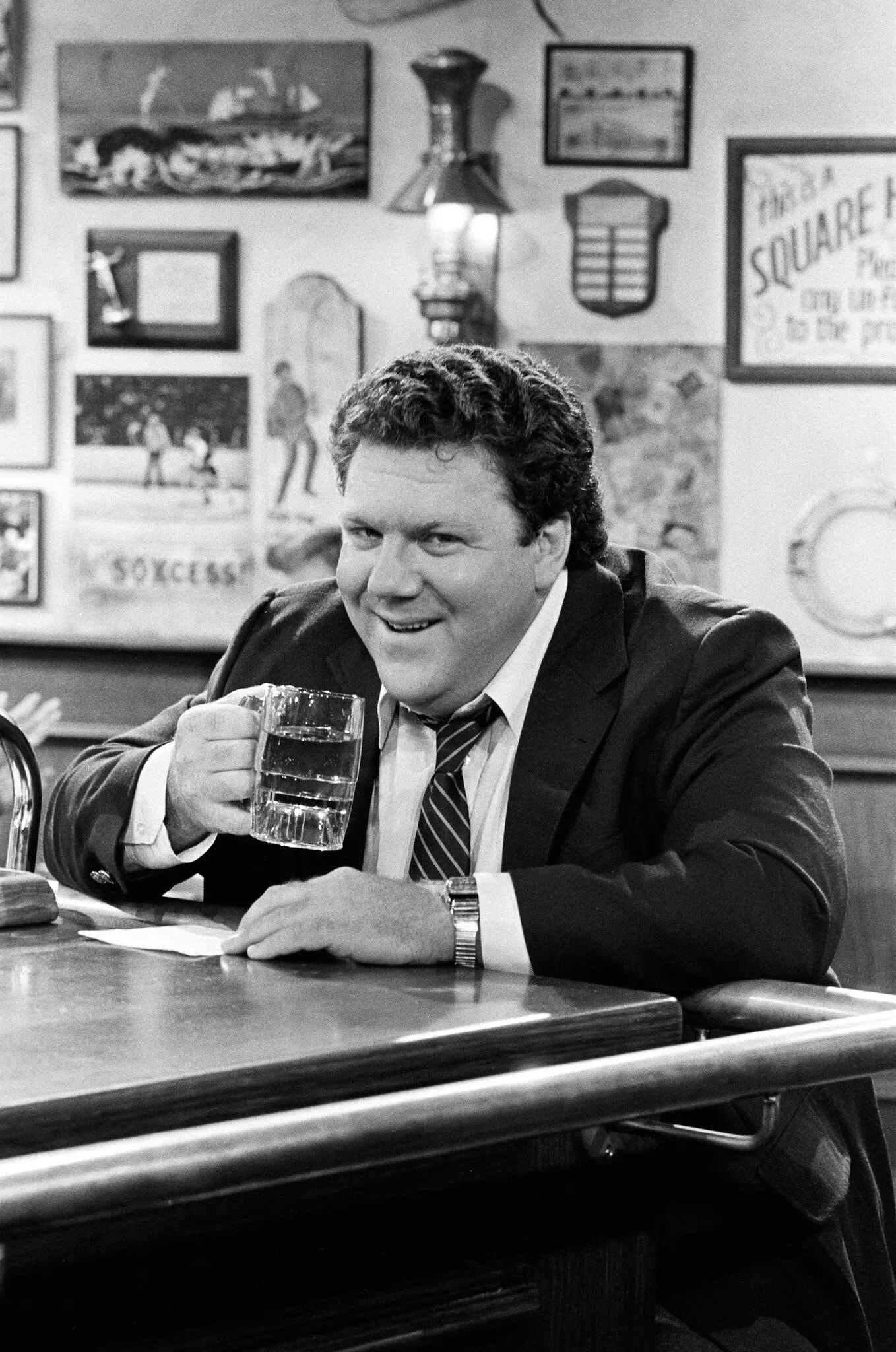
Beyond the Punchlines: How George Wendt’s Norm Peterson Became Fashion for the Soul
The fashion of cultural iconography rarely features rumpled suits and loosened ties, yet George Wendt transformed these everyday sartorial signifiers into the uniform of an American everyman archetype. The acclaimed actor, whose magnetism to his designated barstool made him television royalty, has departed the scene at age 76, peacefully in his sleep surrounded by the comforts of home.
“George was a doting family man, a well-loved friend and confidant to all of those lucky enough to have known him,” read the family’s statement shared with ABC News on Tuesday morning. “He will be missed forever.” In fashion’s vernacular, Wendt was the ultimate classic piece – timeless, versatile, and impossible to replicate.
The six-time Emmy nominee crafted a character whose consistent presence across all 275 episodes of “Cheers” represented a masterclass in comedic subtlety. His entrance aesthetic – that signature loosened tie, unbuttoned collar, and magnetic pull toward his designated perch – spoke volumes about the off-screen existence viewers never witnessed. Like the perfect capsule wardrobe, Wendt’s performance contained deceptively few elements yet expressed the entirety of his character’s world.
source: Allen Berezovsky/Getty Images
Before ascending to the cultural pantheon as television’s favorite barfly, Wendt curated an impressive portfolio with appearances in seminal productions including “MAS*H,” “Taxi” and “Soap” – establishing the foundations of a career that would eventually define an era of American television comedy.
Wendt’s brilliance resided in his transformation of writers’ one-liners into cultural touchstones through impeccable delivery. His ritualistic exchanges with the bar’s staff – “What would you like, Norm?” “A reason to live. Keep ’em coming.” “What you up to, Norm?” “My ears.” – became the verbal equivalent of signature accessories, instantly recognizable and impossible to separate from his persona.
In today’s landscape of nuanced, complex dramedy characterizations, Wendt’s performance stands as a testament to the elegance of simplicity. Much like how certain foundational design principles transcend seasonal trends, Wendt’s portrayal demonstrated how executing a single concept with consistent excellence creates enduring impact. The actor appeared in every episode across eleven seasons, each entrance simultaneously familiar yet refreshed – the television equivalent of reworking a classic silhouette with subtle innovations.
While contemporary critics might argue for more expansive character development, Wendt’s Norm achieved what every great designer aspires toward: instant recognition through carefully crafted minimalism. With the economical efficiency of a blues musician extracting universal emotion from twelve bars, Wendt distilled an entire human existence into variations on a single behavioral motif.
Though his “Cheers” performance represented his most celebrated work, Wendt’s artistic portfolio extended well beyond those immortal bar entrances. Yet there is profound accomplishment in creating a character whose mere presence elicits spontaneous joy – the human equivalent of a perfect ensemble that makes everyone feel more comfortable simply by entering the room.
As the entertainment community reflects on Wendt’s legacy, we’re reminded that true style isn’t about constant reinvention but perfecting signature elements that speak authentically to human experience. In the ephemeral world of television performances, Wendt crafted something permanent – a character who will forever remain synonymous with welcome, comfort, and the quiet dignity of the American working man.
Mary Janika is the rising star in the world of fashion blogging. As a self-proclaimed 'shoe-aholic', Mary launched the blog 'Shoe Queen' to share her love of all things fashion footwear. Based in New York City, the epicenter of the fashion world, Mary constantly has her finger on the pulse when it comes to the latest and greatest shoe trends. From thigh-high boots to sky-high stilettos, Mary provides glimpses into her enviable personal shoe collection and serves up advice on how to style shoes for any occasion. With her down-to-earth attitude and humor-filled posts, Mary has cultivated an enthusiastic following of fellow shoe lovers. When she's not blogging, you'll find Mary thrifting vintage footwear, chatting up shoe designers about their newest collections, and of course, expanding her already-impressive lineup of heels and flats. For top-notch tips from a true shoe queen, look no further than Mary Janika and the Shoe Queen blog.
Taylor Swift Travis Kelce date night looks are officially a genre of their own, and the newlyweds' latest outing proves marriage hasn't dulled their...
Suki Waterhouse Venice Film Festival style delivered exactly the kind of tousled-glamour moment her fans have come to expect. On September 5th, the singer-actress...