The Voice of a New Era: Jamal Roberts’ Historic American Idol Win Through Fashion’s Lens
Last evening’s atmospheric gathering of entertainment luminaries at the “American Idol” finale wasn’t merely another televised spectacle—it was the coronation of a new voice destined to influence our cultural landscape. As the crystalline notes of Queen’s “We Are the Champions” reverberated through the studio, something extraordinary was unfolding before our collective gaze.
Jamal Roberts, the melodious virtuoso and father of three, ascended to claim his rightful position in the pantheon of musical royalty, breaking a two-decade drought as the first Black male victor since Ruben Studdard’s 2003 triumph. The achievement resonates beyond mere entertainment—it speaks to representation in an era hungry for authentic voices.
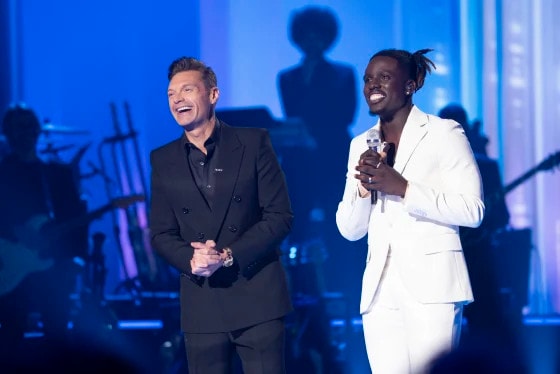
The finale, a masterclass in production aesthetics, boasted record-shattering engagement with an unprecedented 26 million votes cast—double last season’s figures, according to the ever-dapper Ryan Seacrest. Such numbers speak volumes about the persistent cultural relevance of the franchise in our increasingly fragmented entertainment ecosystem.
source: ERIC MCCANDLESS/DISNEY
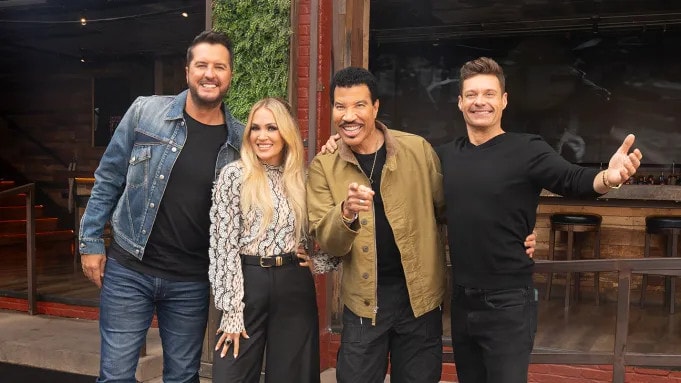
Roberts’ journey to the coveted title wasn’t merely a display of vocal prowess but a narrative of personal evolution under the watchful eyes of the judging triumvirate: the eternally sophisticated Lionel Richie, country gentleman Luke Bryan, and this season’s freshman adjudicator, Carrie Underwood—herself a testament to the program’s ability to cultivate enduring artistry.
The finalists’ sartorial choices throughout the evening complemented their musical performances, with Roberts particularly exhibiting a confident visual signature during his renditions of Teeks’ emotionally layered “First Time” and The Temptations’ classic “Just My Imagination.” His styling choices throughout the season have consistently demonstrated an appreciation for both heritage and contemporary sensibilities—a balance increasingly rare in today’s performance landscape.
The evening’s collaborative performances elevated the proceedings beyond competition into celebration. Roberts’ duet with the tattooed troubadour Jelly Roll created a textural contrast both visually and sonically, while competitors John Foster and Breanna Nix delivered equally compelling partnerships with Luke Bryan and Brandon Lake respectively.
The constellation of guest performers transformed the finale into a veritable fashion tableau—Jessica Simpson’s triumphant return to the spotlight, the nostalgic edge of Good Charlotte, the iconic presence of Patti LaBelle, and the unexpected geometric perfection of Salt-N-Pepa’s coordinated ensembles. Each artist brought their distinctive visual vocabulary to the proceedings, creating a collage of contemporary performance aesthetics.
source: ERIC MCCANDLESS/DISNEY
As Roberts embraces his $250,000 prize package and Hollywood Records deal, the fashion world would be remiss not to take notice of this emerging cultural figure. His authenticity and artistic versatility position him perfectly for the crossover between musical influence and style leadership—a territory previously charted by Idol alumni like Underwood herself.
The grand finale’s concluding tableau—the season’s top fourteen contestants united in harmonious celebration—served as the perfect visual metaphor for the program’s enduring appeal: diverse voices finding common ground through artistic expression.
In an era where genuine talent can be overshadowed by algorithmic noise, Roberts’ victory stands as a testament to the enduring power of authentic artistry. As fashion continues its love affair with musicians who bring substance along with style, we anticipate Roberts’ aesthetic evolution with the same enthusiasm as his musical one.
His victory isn’t merely the conclusion of a television season—it’s the overture to a career that promises to interweave with our cultural fabric in the most harmonious of ways.
Mary Janika is the rising star in the world of fashion blogging. As a self-proclaimed 'shoe-aholic', Mary launched the blog 'Shoe Queen' to share her love of all things fashion footwear. Based in New York City, the epicenter of the fashion world, Mary constantly has her finger on the pulse when it comes to the latest and greatest shoe trends. From thigh-high boots to sky-high stilettos, Mary provides glimpses into her enviable personal shoe collection and serves up advice on how to style shoes for any occasion. With her down-to-earth attitude and humor-filled posts, Mary has cultivated an enthusiastic following of fellow shoe lovers. When she's not blogging, you'll find Mary thrifting vintage footwear, chatting up shoe designers about their newest collections, and of course, expanding her already-impressive lineup of heels and flats. For top-notch tips from a true shoe queen, look no further than Mary Janika and the Shoe Queen blog.
Brooks Nader proved once again why she's become one of Milan Fashion Week's most photographed guests, stepping out on Saturday, September 26 for Dolce...